
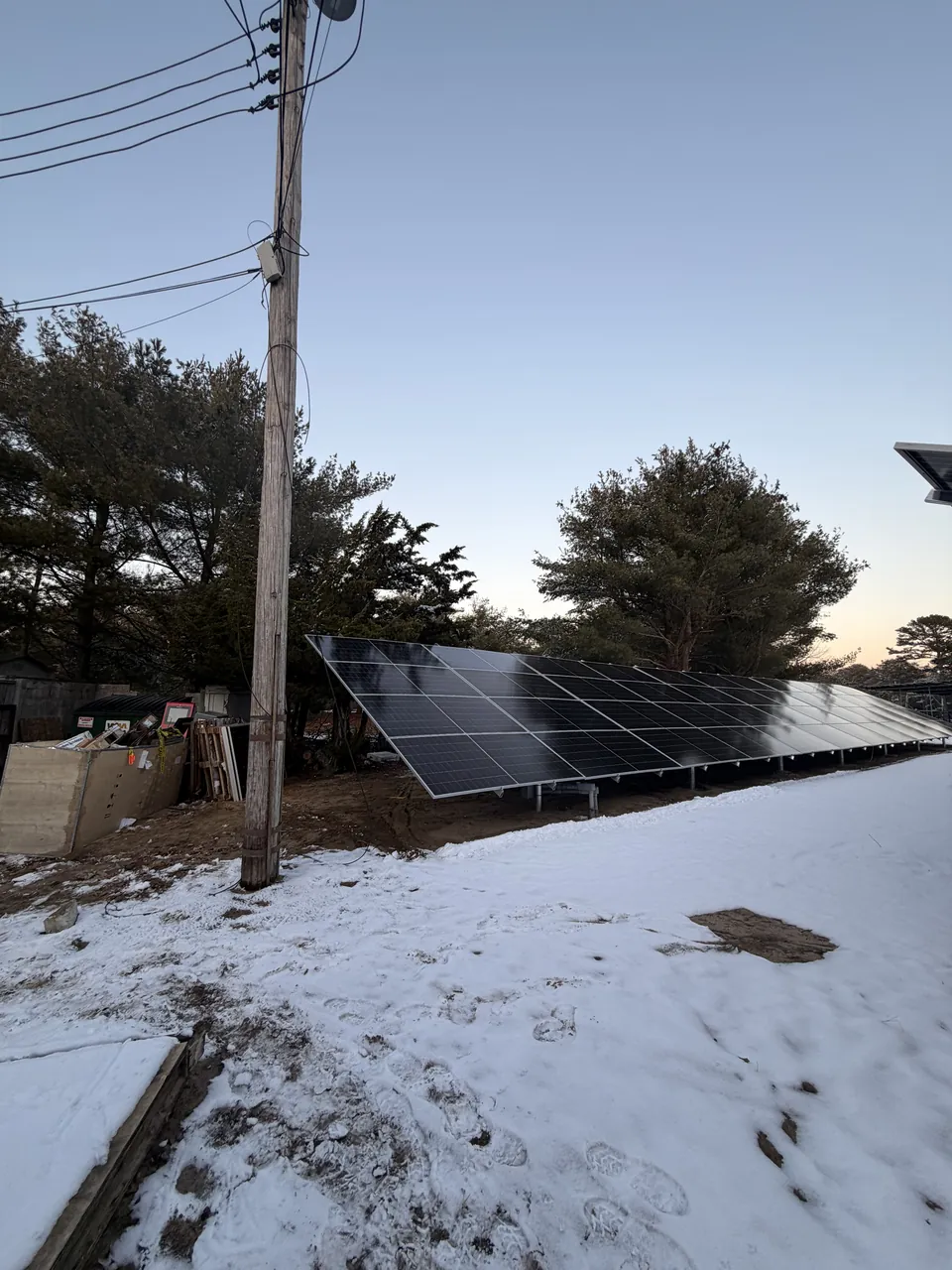
The work
The gap between a panel and the roof is dry, shaded and warm, which makes it the best real estate on the property if you are a squirrel. Once something nests under an array it chews conductors, drags nesting material into the airflow the panels rely on for cooling, and leaves droppings that end up on the roof and in the gutters. The damage is rarely noticed until production drops or a string goes dead, and by then the repair is a roof visit and a length of cable rather than a spool of mesh. Critter guard is a coated wire mesh clipped to the panel frames all the way around the perimeter of the array, with no screws into the roof and nothing that voids a panel warranty. We clear whatever is already living under there first, because closing an animal in is worse than leaving the gap open.
What is included
- The area under the array cleared before anything is closed in
- Coated mesh clipped to the panel frames with no new roof penetrations
- The full perimeter of the array covered, including the awkward corners
- Any chewed or damaged conductors found on the way flagged to you
- Debris and nesting material cleared off the roof and out of the way
How we run it
- 01
Inspect underneath
What is living under the array, what it has already chewed and how it is getting in.
- 02
Clear it out
Nesting material and debris removed, so nothing is closed in behind the mesh.
- 03
Fit the guard
Coated mesh clipped to the panel frames around the full perimeter, with no screws into the roof.
- 04
Check the wiring
Conductors and connectors looked over while we are under there, and anything damaged reported.
Asked about this
Does critter guard damage the panels or the roof?
No. It clips to the panel frames. There are no new holes in the roof and nothing that affects a panel warranty.
How do I know something is under my array?
Scratching or scurrying overhead in the early morning, droppings on the roof or in the gutters, and dark streaks on the shingles under the array are the usual signs.