
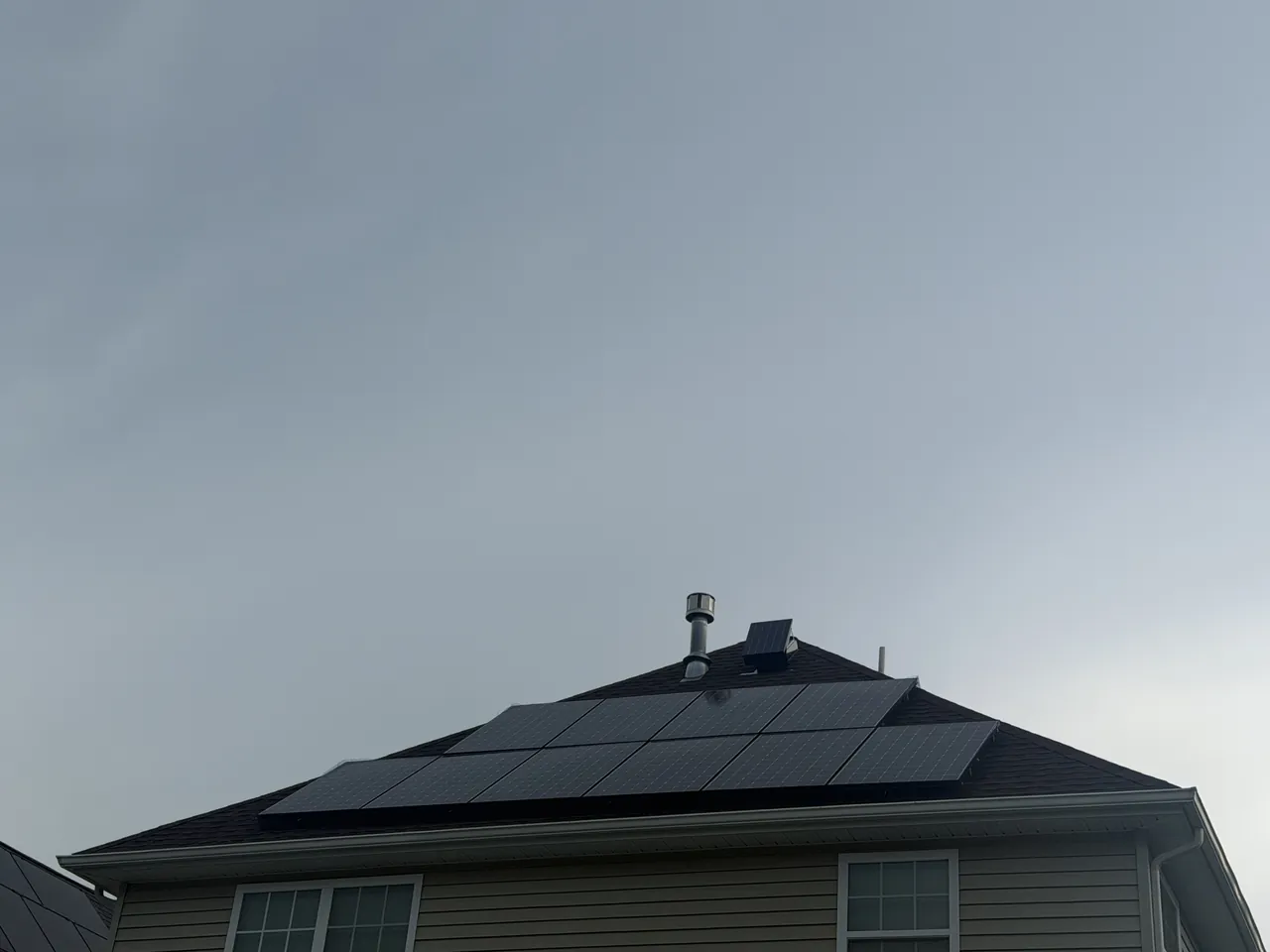
The work
Electric use goes up. A family grows, a heat pump goes in, someone buys an electric car, and the array that covered the bill four years ago now covers most of it. Adding to a system that is already on the roof is not the same job as installing a new one. The new panels have to be electrically compatible with the string they are joining, the inverter has to have the headroom to take them, and there has to be roof left in the right orientation to put them on. We start by reading what is already up there, then tell you what the roof and the inverter will actually allow before anyone orders hardware. The work itself is extending the racking, flashing the new penetrations, hanging and wiring the new panels, and testing the whole array afterwards rather than only the part we touched.
What is included
- A read of the existing array, string layout and inverter headroom before anything is ordered
- Racking extended and new penetrations flashed and sealed
- New panels matched electrically to the string they are joining
- Whole array tested afterwards, not only the new section
- Honest answer when the roof or the inverter will not support what you want
How we run it
- 01
Read the existing system
Panel model, string layout, inverter capacity and how much usable roof is left.
- 02
Tell you what fits
What the inverter will take and what the roof will hold, before hardware gets ordered.
- 03
Extend and mount
Racking extended, new penetrations flashed and sealed, panels hung.
- 04
Wire and test
New panels landed into the string, then the whole array tested and the output checked.
Asked about this
Can I add panels that are a different model to the ones I have?
Sometimes. It depends on the electrical characteristics of the panel and how your strings are wired. We check that before anything is ordered rather than after it arrives.
Will I need a bigger inverter?
Not always. Many systems are installed with some headroom. We read the inverter's rating against what you already have on the roof and tell you either way.