
The work
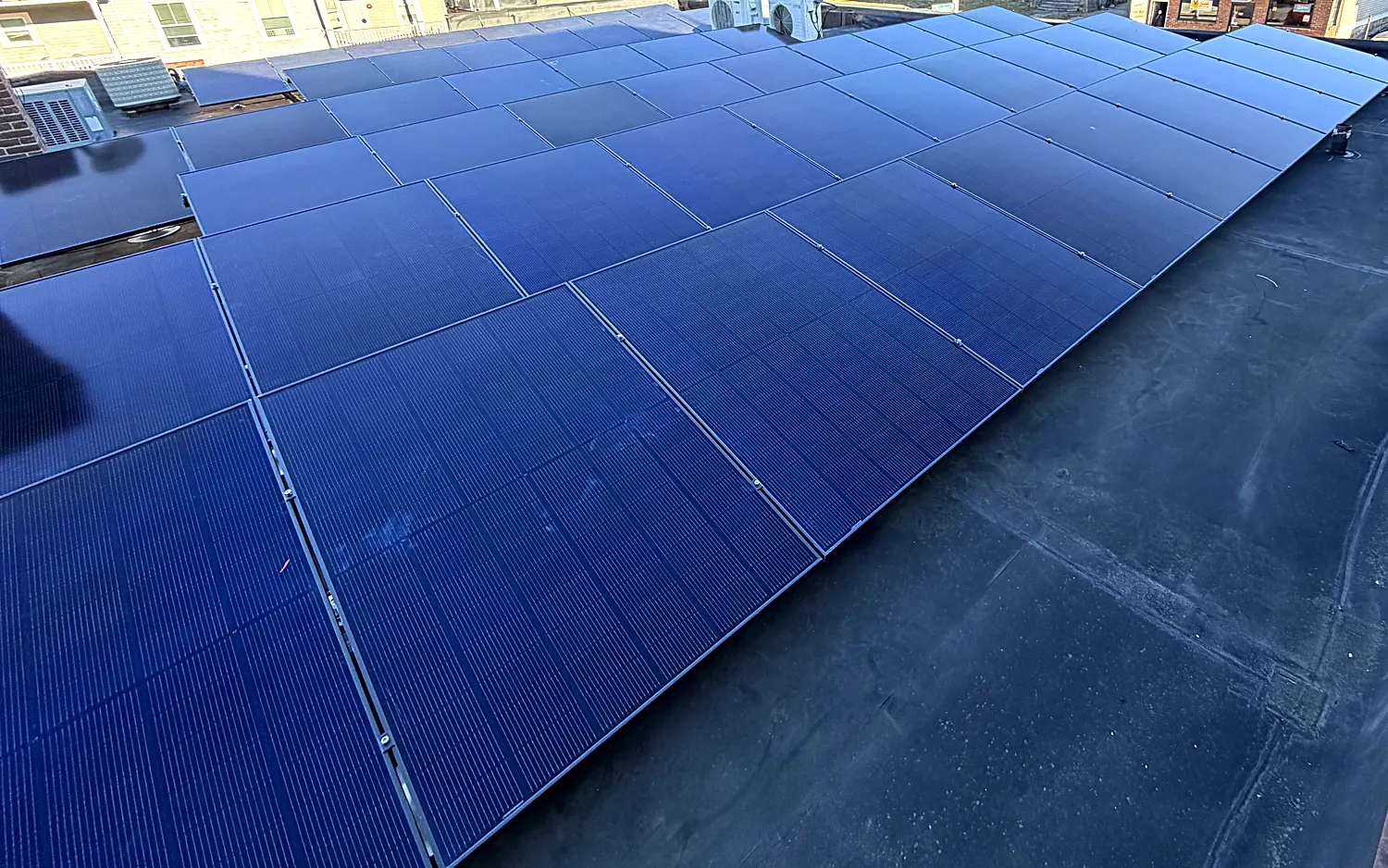
A solar panel makes power from the light that reaches the cell. Anything sitting on the glass between the sun and that cell is light the panel never gets to use. Dust blown off a field, pollen in the spring, salt film near the shore, ash and soot, and bird droppings that bake on and shade a whole cell string all cut into the number your system reports. Rain rinses some of it and leaves the rest banded along the low edge of each panel, which is why a panel can look clean from the driveway and still be filmed over when you get up next to it. We wash the array with deionised water and soft brushes, no detergents and no pressure washer, because both of those can force water past a seal or scratch the anti reflective coating on the glass. On tilted arrays the difference shows in the monitoring the same afternoon.
What is included
- Deionised water and soft brushes only, no detergents and no pressure washing
- The full array washed, including the low edge where run off leaves a band of dirt
- Baked on droppings and sap worked off without scraping the coating
- Frames, clamps and visible wiring looked over while we are up there
- Anything we find wrong with the array reported to you before we leave
How we run it
- 01
Look at the array
How the panels are soiled and what is causing it, since a shaded array under a tree needs a different schedule to one in open sun.
- 02
Wash
Deionised water and soft brushes across the full array, worked from the high edge down.
- 03
Detail the bad spots
Baked on droppings and sap worked off by hand rather than scraped.
- 04
Check and report
Frames, clamps and wiring inspected while we are there, and anything wrong reported to you.
Asked about this
Will rain not clean them for me?
Rain rinses loose dust and leaves the rest. It also carries dirt down the slope and dries it as a band along the bottom edge of every panel, which is the part of the glass that shades a whole cell string.
How often should panels be cleaned?
It depends on what is landing on them. An array near open fields, under trees or close to the shore soils faster than one in an open suburb. We will tell you what yours looks like and what schedule makes sense.