
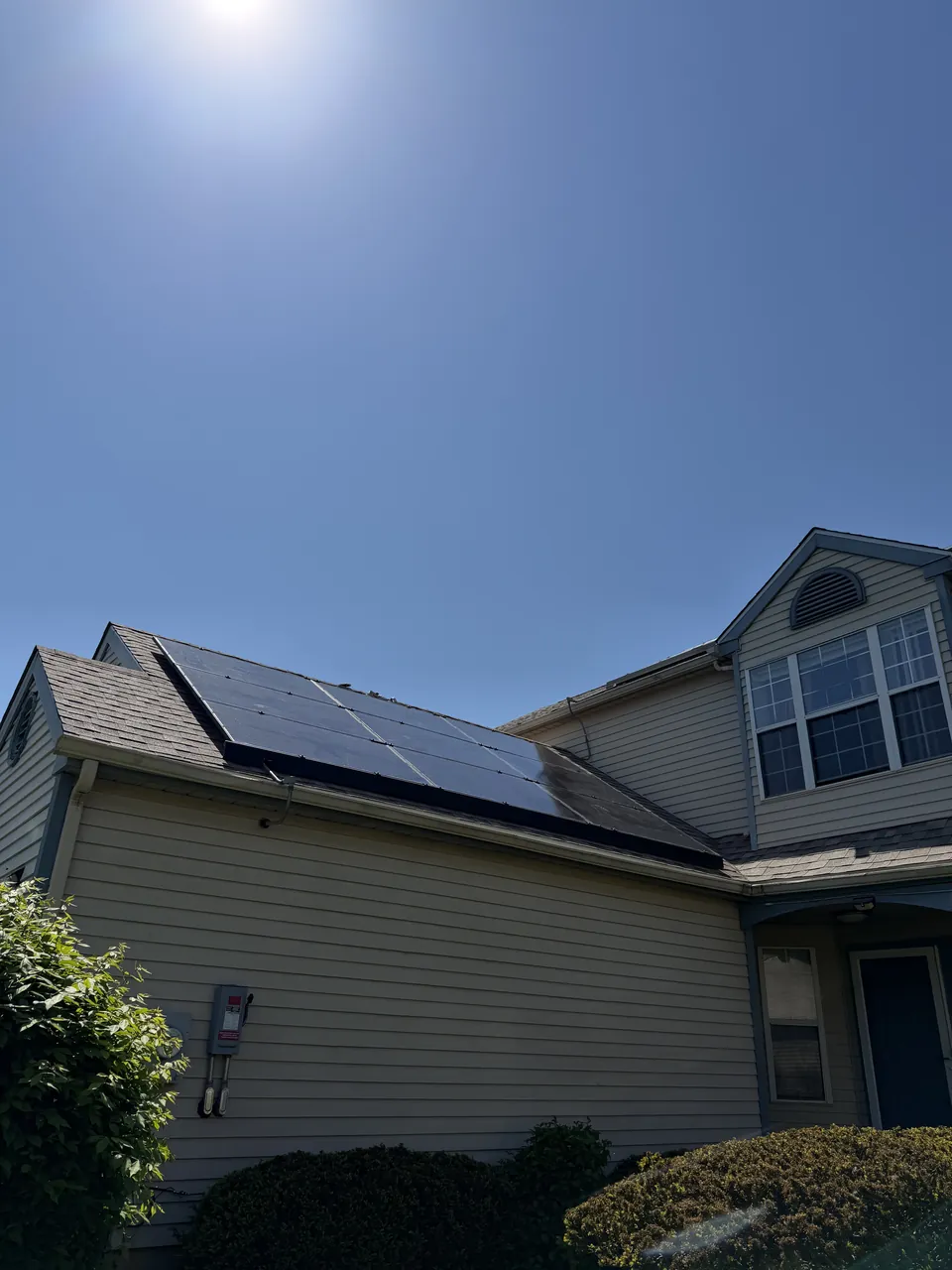
The work
A system that has stopped producing, or that is producing far less than it used to, is telling you something specific. The trouble is that the app only says the number is down, and the number being down covers a failed inverter, a burnt connector, a cracked panel, a tripped breaker, a rodent chewed conductor and a tree that has grown. We work through it in order rather than guessing. That means reading the inverter's own fault log, testing each string under load, checking open circuit voltage panel by panel where the string points at one, and getting on the roof to look at the connectors and the wiring runs. When we find it we tell you what failed, what it costs to put right, and whether the part is still under a manufacturer's warranty you can claim on. Plenty of the calls we get turn out to be a thirty minute fix that somebody has been living with for a year.
What is included
- Inverter fault log read and interpreted rather than reset and hoped over
- Every string tested under load, and panels tested individually where the fault points at one
- Connectors, conduit runs and roof penetrations inspected on the roof
- A plain explanation of what failed and what it costs to fix
- A check on whether the failed part is still covered by a manufacturer warranty
How we run it
- 01
What changed and when
Production history, any recent weather, roof work or electrical work, and what the monitoring shows.
- 02
Test at the inverter
Fault log read, strings tested under load, so the fault is narrowed to a circuit before anyone climbs.
- 03
Test on the roof
Panel level readings and a physical inspection of connectors, clamps and conductor runs.
- 04
Report and repair
What failed, what it costs, what is under warranty, then the repair once you say go.
Asked about this
My installer has gone out of business. Can you still help?
Yes. A lot of our repair work is on systems whose original installer is no longer around. We do not need to have installed it to diagnose it.
How do I know if my system is underproducing?
Compare this month against the same month last year in your monitoring app. Weather moves the number around, but a system that is down year on year in the same season has something wrong with it.